
Trying to decide between microcement and traditional tiles for your upcoming flooring project? Your choice can make a massive difference in how your home renovation looks, feels, and functions over the next decade. For years, tiles have been the go-to option — but they come with multiple grout joints where water, dirt, and bacteria inevitably collect. Microcement, by contrast, creates a flawless, smooth, completely seamless surface designed to last. At just 2–3mm thick, it is significantly lighter than ceramic or porcelain tiles and can be applied directly over your existing floor without any demolition.
A question many homeowners ask during the planning phase is: is microcement expensive compared to tiles? To answer that accurately, you have to look well beyond the retail price of materials. Because microcement goes straight over existing tiles, you eliminate the demolition process entirely — no skip bins, no messy labour, no re-waterproofing. That saving alone can offset a significant portion of the premium upfront cost.
Today, architects and design-conscious homeowners are choosing microcement for its ability to resist tough stains and mould, particularly in high-traffic and wet areas. It is also a more environmentally responsible choice — it uses less raw material, generates zero demolition waste when applied over existing floors, and has an exceptional lifespan. This guide breaks down the true cost comparison between microcement and tiles, including the long-term maintenance factors that tip the balance decisively.
What Is Microcement and How Is It Used in Modern Homes?
Microcement is a highly advanced decorative coating that blends high-performance cement, water-based resins, specialist additives, and natural mineral pigments. Unlike standard concrete, this thin-layer composite bonds exceptionally well to almost any solid surface — concrete, timber, plasterboard, and even existing tiles — without requiring removal of what sits beneath.
Material Composition and the Application Process
The core of microcement combines traditional cement with flexible polymer resins, ultra-fine aggregates, and mineral pigments for custom colour matching. This formula performs far better than traditional cement coatings in both aesthetics and structural function. Standard polished concrete must be poured 50–100mm thick, which is heavy and raises floor heights considerably. Microcement achieves a rock-hard finish at just 2–3mm — that is precisely why it is called “micro.”
Application requires several careful, highly skilled steps — this is not a DIY weekend project. The surface must be meticulously prepared, often using diamond grinding equipment (similar to the process used in our floor levelling and preparation service). This is followed by an epoxy moisture barrier or bonding primer, fibreglass mesh for crack prevention, and multiple trowelled layers of the microcement mixture. Each layer is sanded and refined before the next is applied, building toward the smooth, cloud-like finish that makes microcement so distinctive in high-end Australian home design.
Where Microcement Flooring Is Commonly Installed
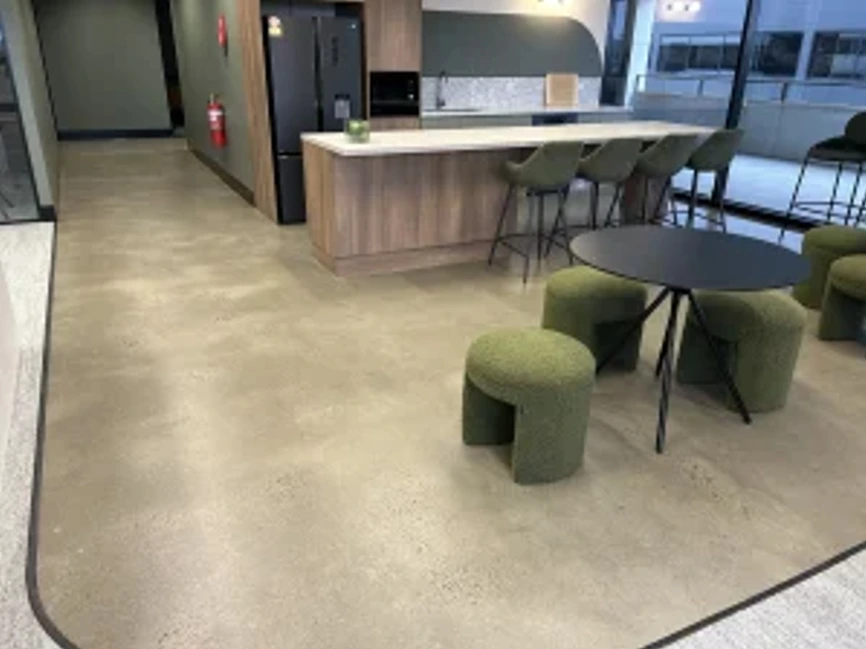
Because microcement is versatile, waterproof, and visually striking, it is appearing in an increasingly wide range of spaces around modern Australian homes:
- Bathrooms and Wet Rooms: Microcement works flawlessly on shower walls, floors, and vanity benchtops. With zero grout lines, there is nowhere for mould to establish itself. High-grade polyurethane sealers make it ideal for creating luxurious, spa-like spaces.
- Kitchens: The sealed surface resists wine, oil, and coffee stains and cleans up easily. It is highly popular for kitchen floors, island benchtops, and contemporary splashbacks.
- Living and Dining Areas: Continuous, unbroken surfaces handle heavy daily foot traffic, pets, and furniture movement with ease — while creating a cohesive visual flow between rooms.
- Outdoor Spaces: Patios, alfresco dining areas, and pool surrounds benefit from microcement’s UV stability, weather resistance, and customisable slip-resistant texture. If you are weighing up outdoor flooring options more broadly, our guide on concrete overlays covers further alternatives.
Microcement Over Existing Tiles: Is It Really Possible?
Yes — and this is one of microcement’s most commercially significant advantages. Applying microcement directly over existing tiles lets you renovate without creating a dusty demolition site, hiring skip bins, or paying heavy labour costs to tear everything out.
For this to work, the existing tiles must be structurally stable, with no loose or hollow-sounding pieces. The professional process starts with a thorough clean and mechanical scuff of the tile surface, followed by filling all existing grout joints with a specialised epoxy resin to create a completely flat canvas. An adhesion primer is applied before the microcement layers begin. Bathroom and kitchen renovations have shifted strongly toward this method because tile removal — particularly in wet areas — can be outrageously expensive and stretch timelines out by weeks.
Bathroom Transformations: The Beauty of Grout-Free Showers
Microcement solves the most persistent problems found in tiled bathrooms. Over time, tiled showers allow water to seep through microscopic cracks in the grout, causing structural rot and mould behind the walls. Microcement, sealed with high-grade polyurethane, creates a solid, impenetrable barrier that keeps moisture completely out. There are no grid lines where mould can breed or discolouration can take hold.
Daily maintenance becomes genuinely simple — a quick wipe with a microfibre cloth and a neutral pH cleaner is all that is needed to keep a microcement bathroom looking pristine. No harsh bleach, no grout brush, no quarterly re-sealing of joints.
Kitchen Flooring: Unmatched Spill Resistance and Style
Kitchens create unique demands that microcement handles well. The sealed surface resists food stains far better than porous tile grout, which permanently discolours from spilled wine, coffee, or cooking oil. The microcement surface remains structurally strong under the concentrated weight of heavy appliances — double-door refrigerators, large ovens, and commercial-grade ranges.
Beyond practical function, its seamless finish delivers the highly sought-after minimalist, industrial aesthetic that defines today’s open-plan kitchens. The smooth, trowelled surface creates a neutral canvas that lets cabinetry, lighting, and architectural features stand out clearly — without competing with a busy tile grid.
The Big Question: Is Microcement Expensive? (Full Cost Breakdown)

When planning a renovation, the question “is microcement expensive?” deserves an honest, detailed answer. A true cost comparison between microcement and tiles must account for demolition, labour, waterproofing, long-term maintenance, and the reseal cycle — not just the material purchase price.
Cost of Microcement vs Tiles: Real Figures for Melbourne in 2026
Professionally installed microcement typically costs between $200 and $500 per square metre, placing it firmly in the premium architectural finish category. On the surface, basic ceramic tiles appear cheaper — often starting from $45 per square metre for materials alone. However, high-end large-format porcelain or natural stone tiles can easily reach $300 to $500 per square metre once you add premium epoxy grout, adhesive, waterproofing membrane, and professional laying fees.
The real cost advantage of microcement becomes clear when you add the items tiles always require but microcement does not: tile removal and disposal ($50–$120 per square metre depending on the situation), skip bin hire, re-waterproofing the substrate, and the ongoing cost of professional re-grouting every 5–7 years. Applied over existing tiles, microcement eliminates every one of those line items. For a standard Melbourne bathroom of 8–12 square metres, that saving can easily reach $2,000 to $4,000 before the microcement itself has even been quoted.
Why Does Microcement Cost What It Does?
The price reflects the craftsmanship. Microcement is not a product you unbox and glue down — it is an artisanal process requiring 5 to 8 distinct layers, including primers, base coats, fine coats, sanding between layers, and multi-coat polyurethane sealers. Each stage has mandatory curing times and requires a highly trained applicator who understands trowel technique, temperature control, and precise mixing ratios. A rushed or undertrained installation will crack, delaminate, or discolour — which is why choosing an experienced Melbourne installer matters enormously.
Installation Time and Labour Differences
A proper microcement installation takes 5–7 consecutive days from start to finish. Because it relies on chemical curing between each layer, the process cannot be compressed without compromising the outcome. While laying standard tiles might appear faster on paper, the reality of a tiled renovation includes demolition, slab grinding, new waterproofing membranes, adhesive bed, tile laying, grouting, and grout sealing — coordinating demolition crews, waterproofers, and tilers across multiple visits. Total project timelines for tiled wet-area renovations in Melbourne commonly stretch to 3–5 weeks when coordinating multiple trades.
Return on Investment: Resale Value and Long-Term Costs

While ceramic tiles can physically endure for 40 years, the grout lines typically fail, crack, or become deeply stained within 5–7 years — requiring expensive professional re-grouting. Microcement delivers 10–20 years of flawless service. When it does eventually show wear, you do not replace the floor — a professional applies a fresh polyurethane topcoat and the surface looks brand new for a fraction of the replacement cost.
Both materials add property value, but current architectural trends strongly favour seamless, minimalist finishes. A microcement bathroom or kitchen signals premium craftsmanship to buyers in a way that standard tiling simply does not. If you are comparing seamless finish options more broadly, our detailed guide on microcement vs epoxy flooring helps clarify which direction suits your property goals. For open-plan spaces where you want a continuous look between the garage and living areas, it is also worth reading how microtopping compares to polished concrete.
Performance in Challenging Conditions
The real difference between microcement and tiles becomes most apparent in demanding conditions that test structural durability and resistance. Each material responds very differently to environmental stress.
Moisture, Heat, and Underfloor Heating Compatibility
Microcement’s thermal conductivity makes it one of the best-performing materials for underfloor heating systems, whether hydronic or electric. Applied at just 2–3mm, heat transfers rapidly and evenly from the heating elements directly to the surface — warming up far faster and using significantly less energy than a conventional 15mm ceramic tile and adhesive bed. This makes a genuine, measurable difference to quarterly energy costs in Melbourne’s cooler months.
Microcement also handles heat sources well near fireplaces and kitchen splashbacks behind stovetops. While extreme temperature fluctuations can cause rigid tiles to pop or crack at grout joints, microcement’s polymer-infused composition allows it to flex slightly with minor expansion and contraction without failing.
Outdoor Use: Patios and Pool Surrounds
Microcement’s toughness makes it a strong choice for outdoor patios and pool surrounds across Melbourne’s variable climate. It stands up to harsh UV exposure, heavy rain, and temperature swings without breaking down, yellowing, or cracking at joints. Because the final texture is fully customisable during application, installers can deliver a highly slip-resistant surface that meets safety requirements for wet pool areas — something that smooth outdoor tiles consistently struggle with.
Microcement vs Tiles: Full Comparison Table
| Feature | Microcement | Traditional Tiles |
| Thickness | 2–3mm (does not affect door clearances) | 10–20mm plus tile adhesive bed |
| Surface aesthetic | 100% seamless, joint-free, continuous | Grid pattern with visible grout lines |
| Water resistance | Completely waterproof when sealed | Tiles are waterproof; grout absorbs water |
| Application over existing floors | Yes — directly over sound existing tiles | Requires costly removal of existing surface |
| Maintenance requirements | Wipe-clean; reseal topcoat every few years | Regular grout scrubbing; re-grouting every 5–7 years |
| Underfloor heating | Excellent — rapid, efficient heat transfer | Good — slower heat-up through thick material |
| Mould resistance | Very high — no joints for mould to colonise | Prone to black mould and mildew in grout lines |
| Environmental impact | Low — no demolition waste, minimal raw material | High when replacing — significant landfill waste |
| Repairability | Topcoat reseal restores appearance — no replacement needed | Individual tile or full floor replacement required |
What About Microcement vs Other Seamless Flooring Options?
If you are drawn to seamless flooring but want to explore all options before committing, Allgrind installs and compares several systems across Melbourne. Microcement is the clear leader for wet areas, thin-build applications, and renovations over existing tiles — but depending on your space, budget, and use case, other surfaces may suit you better.
- Microcement vs epoxy flooring — compare how these two seamless systems differ in cost, durability, and best use cases for residential and commercial spaces.
- Microtopping vs polished concrete — understand how a thin decorative overlay compares to a full diamond-polished finish for open-plan living areas.
- Polished concrete floors — explore the full range of polished concrete finishes Allgrind delivers across Melbourne, from residential homes to commercial spaces.
Final Verdict: Which Surface Truly Delivers?
When you look closely at the full picture — upfront cost, demolition savings, long-term maintenance, repairability, and the quality of daily living — microcement consistently outperforms traditional tiles for modern Australian homes.
The question “is microcement expensive?” becomes much easier to answer once you account for what tiles actually cost over their lifespan: demolition and disposal, re-waterproofing, professional re-grouting, grout cleaning, and eventual tile replacement when the grout fails structurally. Microcement sidesteps every one of those costs. Its higher upfront installation price delivers a net saving in most renovation scenarios — particularly in wet areas where tile grout fails within a decade.
If you want a seamless, contemporary finish with low maintenance, highly hygienic properties, and complete waterproofing, microcement is the superior choice for most Melbourne homes and renovations. Contact the team at Allgrind for an obligation-free site assessment and quote.
Frequently Asked Questions
Is microcement expensive compared to traditional tiling?
Microcement costs between $200 and $500 per square metre professionally installed, which is higher than basic ceramic tiles on materials alone. However, when you factor in what tiling actually requires — demolition ($50–$120 per square metre), skip bin hire, re-waterproofing, and re-grouting every 5–7 years — microcement is highly competitive on total cost. Applied over existing tiles, it eliminates demolition entirely, which can save $2,000 to $4,000 on a standard Melbourne bathroom renovation before installation even begins.
Can I apply microcement directly over my old bathroom tiles?
Yes — provided the existing tiles are structurally sound and firmly bonded to the substrate. Professionals clean and mechanically scuff the tile surface, fill all grout joints with specialised epoxy resin to create a flat base, apply an adhesion primer, and then proceed with the microcement layers as usual. This approach prevents demolition, eliminates the need for new waterproofing, and significantly reduces your renovation timeline and total cost.
What are the main disadvantages of microcement?
Microcement is not suitable for DIY application — the 5 to 8 layer process requires trained craftsmen with the right equipment and product knowledge. If the substrate beneath is structurally weak or actively moving, cracks can transfer through to the microcement surface. The full application and curing process takes 5–7 days and cannot be rushed between layers. It also requires periodic topcoat resealing (typically every few years in high-traffic wet areas) to maintain its waterproof properties and appearance.
How does microcement perform in wet areas like showers?
Microcement excels in high-moisture environments. Finished with high-quality polyurethane sealers, the surface becomes completely waterproof. Because there are no grout lines whatsoever, there is nowhere for mould, mildew, or soap scum to accumulate — making the shower dramatically easier to keep clean than any tiled alternative. A wipe-down with a neutral pH cleaner is all that is needed for daily maintenance.
Does microcement scratch or stain easily?
When professionally sealed, microcement is highly resistant to everyday stains from food, wine, and oils. Like any premium surface — hardwood, polished concrete, or natural stone — it is durable but not indestructible. Dragging sharp or heavy furniture across it without felt pads can cause superficial scratches to the clear sealer coat. These can be buffed out and resealed by a professional without replacing the floor — a significant advantage over tiles, where damage typically requires individual tile replacement and colour-matched grout.
How does microcement compare to tiles for underfloor heating?
Microcement is superior to thick tiles for underfloor heating performance. At just 2–3mm thick with excellent thermal conductivity, heat transfers through the coating rapidly and evenly — warming your floor noticeably faster and using less energy than pushing heat through a 15mm ceramic tile and adhesive bed. This makes a measurable difference to running costs during Melbourne winters, particularly for hydronic systems.
How long does microcement last, and does it need resealing?
A professionally installed microcement floor delivers 10–20 years of flawless service with basic maintenance. The polyurethane topcoat in high-traffic wet areas (showers, kitchen floors) may benefit from a professional reseal every 3–5 years to maintain peak waterproofing and gloss. This is a minor maintenance cost compared to the professional re-grouting that tiled surfaces require on a similar or more frequent cycle — and far less disruptive to the space.
Is microcement suitable for outdoor areas in Melbourne?
Yes. Microcement handles Melbourne’s climate well — UV exposure, heavy rain, temperature swings, and frost in elevated areas. It is used on patios, alfresco dining spaces, pool surrounds, and garden paths. The installer can adjust the final texture to achieve a slip-resistant surface that meets safety standards for wet outdoor areas. An exterior-grade sealer is specified for outdoor installations to handle UV and weather exposure over the long term.