
If you are a homeowner in Melbourne, you have likely looked at your dull, stained, or cracked garage floor and wondered how to improve it. Doing something about protecting your garage floor is one of the best home improvement decisions you can make so that it lasts longer, looks better, and increases your property value.
These days, garages are often used for much more than just car parking. They can easily be transformed into home gyms, creative home studios, workshops, or utilized for extra functional spaces like laundries or food storage. Because of this high utility, a proper floor coating is crucial. It drastically increases the durability of your concrete floor, prevents concrete dusting, and gives the room a vastly superior aesthetic value.
It is incredibly important for garage floors to be sturdy so that they can withstand heavy vehicle traffic, dropped tools, and chemical spills. For this reason, you might be wondering which are the best products to protect your floor. The most common debate among homeowners is: Which is better – painting the garage floor or applying an epoxy coating? Let’s break down the differences, benefits, and long-term costs of both.
What are Garage Floor Coatings and What is Their Function?
Garage floor coatings and paints are essential treatments used to protect the bare concrete floor from hot-tyre pickup, oil spills, grease stains, and general wear and tear. A bare concrete slab is highly porous, meaning it easily absorbs liquids, leading to permanent, ugly stains and structural degradation over time.
Despite the availability of several DIY coating options at local hardware stores, epoxy floor coatings and heavy-duty garage paints stand out as the two most commonly discussed solutions. However, they are vastly different products. While paint simply sits on top of the concrete, epoxy actually bonds with the concrete itself. Epoxy flake flooring has proven to be much more reliable, as the process includes professional concrete grinding to open the concrete pores before a two-part resin system is applied.
Understanding Garage Floor Paint (Latex & Acrylic)
Standard garage floor paint is typically a tough latex or acrylic paint designed specifically for concrete. It is mixed with a small amount of epoxy resin to make it slightly more durable than standard wall paint, but it remains, at its core, just paint.
The Pros of Painting:
- Low Initial Cost: Floor paint is inexpensive and readily available at any hardware store.
- Easy DIY Application: You can apply it yourself with a standard roller over a weekend.
- Immediate Improvement: It immediately covers up dull concrete and brightens the space.
The Cons of Painting:
- Hot-Tyre Pickup: The biggest flaw of paint is that hot car tyres will melt the paint and peel it right off the concrete when you reverse out of the garage.
- Short Lifespan: Paint chips, flakes, and wears away quickly under foot and vehicle traffic. You will likely need to repaint every 1 to 2 years.
- Not Stain Resistant: Oil, chemicals, and brake fluid will stain and eat through standard floor paint.
What is Epoxy Floor Coating?
An epoxy coating is not a paint; it is a thermosetting resin. The epoxy mixture comprises two distinct components: a polyamine hardener and an epoxy resin. When these two parts are mixed together prior to application, a chemical reaction occurs that turns the liquid into a dense, solid plastic surface that bonds fiercely to the prepared concrete.
You can choose either a clear coat, a solid colour, or a highly decorative flake finish. For solid colours, the pigment is mixed directly into the epoxy resin. Because the epoxy cures rather than dries, it provides an incredibly hard, thick surface that perfectly protects your concrete floor from heavy impacts, dropped tools, and harsh chemicals.
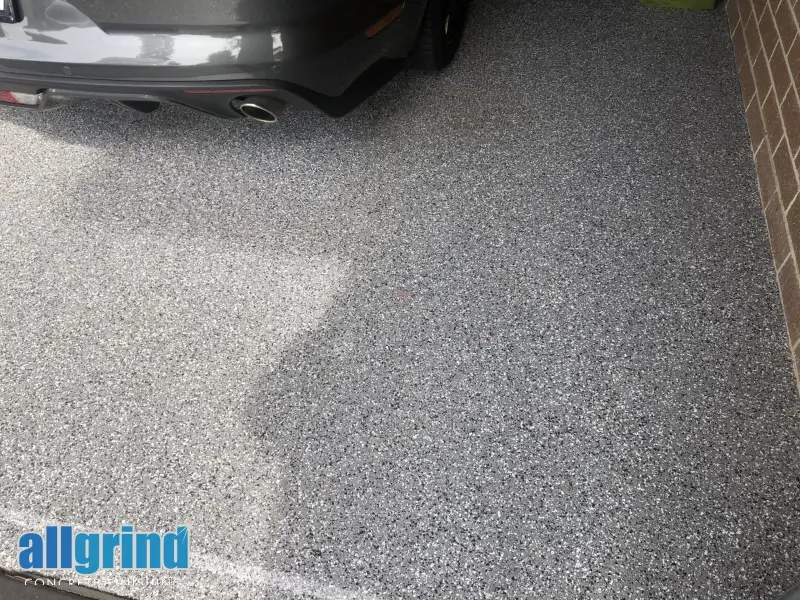
At Allgrind, we highly recommend our premium vinyl flake flooring. This is a multi-layered finish that includes a base coat of epoxy, a full broadcast of decorative vinyl flakes, and a UV-stable polyurethane topcoat. This specific finish hides dust beautifully, provides a slight anti-slip texture, and looks absolutely fantastic in modern homes.
What are the Advantages of an Epoxy Coating Over Normal Floor Paint?
The difference is night and day. Epoxy provides a dramatically more durable finish for your garage floors than normal floor paint. Here is why epoxy is considered the superior investment:
1. Extreme Durability and Longevity
While standard paint may last a year before chipping, a professionally installed epoxy floor can easily last 10 to 20 years with minimal maintenance. It handles heavy vehicle traffic without succumbing to hot-tyre pickup.
2. Chemical and Stain Resistance
If your car leaks oil or you spill harsh chemicals in the garage, epoxy will not absorb them. You can simply wipe up oil, grease, brake fluid, and water with a rag, leaving the floor looking brand new.
3. Superior Preparation
Applying an epoxy flake floor system includes professional concrete grinding and levelling. We physically grind the top layer of the concrete to open the pores, patch any cracks, and ensure the surface is perfectly even and ready for the coating to bond securely. In contrast, painting is usually just rolled onto the existing concrete. Simply painting over a garage floor will not improve its structural durability and will actually highlight existing imperfections, divots, and cracks in the concrete slab.
4. Superior Aesthetics
Epoxy offers a premium, high-gloss showroom finish that paint simply cannot replicate. It reflects light, making your garage look brighter, larger, and cleaner.
Is Polished Concrete an Alternative to Epoxy?
For homeowners looking for an alternative to both paint and epoxy, polished concrete is an incredibly popular choice. Rather than applying a coating over the slab, the concrete itself is ground down, densified, and polished to a high shine using diamond tooling.
Polished concrete is highly scratch-resistant and will never peel because there is no topical coating to delaminate. If you are curious about how this compares financially, you can review our concrete polishing cost guide to see if it fits your garage renovation budget.
Your Melbourne Garage Floor Specialists
If you want to achieve maximum durability and a flawless finish, it is essential to get a professional to apply your epoxy. DIY kits often fail because the homeowner lacks the heavy-duty grinding equipment required to properly prepare the concrete. By hiring professionals, you won’t fall into the trap of cheap paint or failing DIY epoxy that will soon take you back to square one.
At Allgrind, epoxy flooring with flakes is our most highly requested garage floor service. We travel across all suburbs of Melbourne, servicing new residential builds and renovating older homes. The flake flooring looks amazing no matter the style, age, or aesthetic of your property.
Ready to transform your garage?
We can give you a quick, accurate guide price over the phone. It’s incredibly affordable for such a high-end finish in both look and durability. Don’t settle for peeling paint—invest in your home today.
Contact Nick Aylward at Allgrind
Phone: 03 9001 6553
Or, try our new Floor Visualiser Tool to see how an epoxy floor will look in your space!
Frequently Asked Questions (FAQs)
1. Is epoxy more expensive than garage floor paint?
Initially, yes. A professional epoxy installation costs more upfront because it involves diamond grinding the concrete and using high-grade industrial resins. However, standard paint will chip and peel within a year, requiring constant repainting. Over a 5 to 10-year period, epoxy is actually the much cheaper and more durable investment.
2. Can I just paint over an old epoxy floor?
No, paint will not adhere properly to an existing epoxy surface. If your old floor is failing, the best approach is to hire professionals to grind the old coating completely off, exposing the bare concrete, before applying a fresh, durable epoxy system.
3. Will hot car tyres peel up an epoxy floor?
Standard latex and acrylic floor paints are notorious for “hot-tyre pickup,” where the heat from your car’s tyres melts the paint and peels it off the floor. A professionally installed, two-part epoxy resin chemically bonds with the concrete and will absolutely not peel under hot tyres.
4. How long does a professional epoxy installation take?
For a standard double residential garage, the entire process usually takes 2 to 3 days. Day one involves diamond grinding and applying the base coat and flakes. Day two involves scraping the excess flakes and applying the clear protective polyurethane topcoat.
5. Are epoxy floors dangerously slippery when wet?
A solid colour, high-gloss epoxy floor can be slippery when wet. However, this is easily solved. At Allgrind, we highly recommend Vinyl Flake Flooring or adding a non-slip aggregate (like aluminum oxide or glass beads) into the topcoat to provide excellent traction and safety.