
The Ultimate Guide: Top 10 FAQs About Epoxy Flooring for Home Garages in Melbourne
If you are considering upgrading your garage floor, you are joining a growing trend across Melbourne. The modern home garage has evolved far beyond a dusty, oil-stained parking spot. Today, it serves as an extension of the living space—acting as a home gym, a high-end workshop, a man-cave, or a pristine showroom for your prized vehicles.
However, bare concrete is porous, creating dust and absorbing every drop of oil, brake fluid, or dirty water that touches it. This is where professional epoxy flooring steps in. Unlike traditional water-based concrete paints that chip and peel under the stress of hot car tyres, a true two-part epoxy system delivers a thick, mechanically bonded, and incredibly resilient surface.
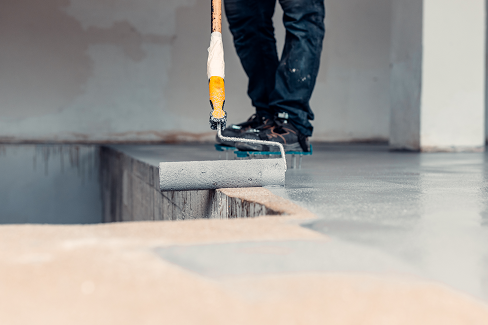
At Allgrind, we are Melbourne’s trusted specialists in seamless concrete finishes. We know that investing in a new floor is a significant decision for any homeowner. To help you navigate the process, we have compiled the definitive answers to the top 10 most frequently asked questions regarding residential garage epoxy flooring.
1. What exactly is epoxy flooring, and how does it differ from garage paint?
This is the most common misconception. Epoxy is not paint. Standard garage floor paint is usually a latex acrylic product that dries as the water evaporates, leaving a very thin film on the surface.
Epoxy flooring is a high-performance thermosetting resin. It consists of a two-part mixture: an epoxide resin and a polyamine hardener. When these two components are blended, a highly exothermic chemical reaction occurs. The material cures rather than dries, cross-linking to form a rigid, impermeable plastic structure that physically penetrates and bonds to the porous concrete substrate. Professional-grade epoxies are typically “100% solids,” meaning they do not shrink as they cure, resulting in a much thicker and more impact-resistant surface than any paint could ever achieve.
2. What are the main benefits of installing epoxy in my garage?
The benefits go far beyond just looking fantastic. A high-quality epoxy floor provides:
- Chemical & Stain Resistance: It creates a completely non-porous barrier. Engine oil, coolant, brake fluid, and harsh household chemicals can simply be wiped away without leaving a permanent stain.
- Impact & Abrasion Resistance: The dense molecular structure easily handles dropped spanners, heavy toolboxes, and the constant friction of rolling jacks.
- Dust Elimination: Bare concrete constantly sheds fine silica dust (a process called “dusting”). Epoxy seals the slab completely, keeping your garage, cars, and stored items significantly cleaner.
- Aesthetic Enhancement: Especially when using a vinyl flake flooring system, epoxy transforms a dull grey slab into a vibrant, showroom-quality surface that hides minor dirt and imperfections.
3. How do you prepare the concrete before applying the epoxy?
Preparation makes up 80% of a successful epoxy installation. You cannot simply sweep the floor and roll out the resin. If the concrete is not profiled correctly, the epoxy will fail.
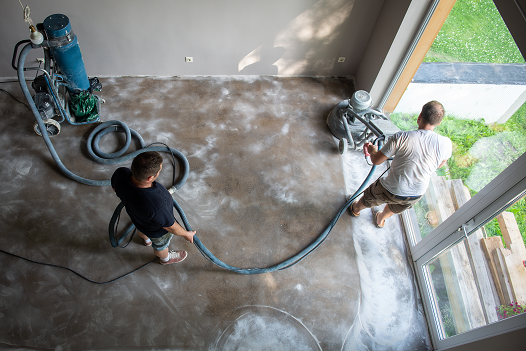
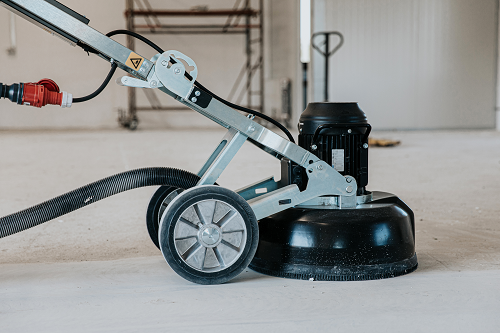
At Allgrind, our floor preparation and levelling process is rigorous. We use heavy-duty walk-behind planetary grinders equipped with diamond tooling to physically shave the top layer of the concrete. This removes old stains, laitance (weak concrete paste), and opens the pores of the slab. Once ground, we meticulously vacuum the dust and use specialized epoxy patching compounds to fill any spalls, divots, or structural cracks, ensuring a perfectly smooth canvas for the base coat.
4. Can epoxy be applied over old paint, existing coatings, or chemical sealers?
Absolutely not. For an epoxy coating to achieve its legendary durability, it must bond directly with the bare concrete matrix. If we were to apply high-grade epoxy over an existing layer of cheap paint or a polyurethane sealer, the new floor would only be as strong as the old coating beneath it. As soon as the old paint fails, the new epoxy will delaminate and peel off right along with it. This is why our diamond grinding process is non-negotiable—it strips away all old coatings to reach the fresh, raw concrete underneath.
5. How long does the entire installation process take?
For a standard two-car residential garage, you should expect the process to take between two to three days, depending on temperature and humidity.
- Day 1: Heavy mechanical diamond grinding, crack chasing, vacuuming, and the application of a deep-penetrating epoxy primer or base coat.
- Day 2: Broadcasting the decorative vinyl flakes to full rejection (covering the entire wet base coat), allowing it to cure, then scraping off the excess flakes. Finally, a clear, UV-stable aliphatic polyurethane or polyaspartic topcoat is applied.
Curing Times: You can typically walk on the floor with socks 24 hours after the final coat. However, you must wait 5 to 7 days before driving heavy vehicles onto the floor to allow the resins to reach their maximum compressive strength.
6. Can I save money by using a DIY hardware store epoxy kit?
While DIY kits are tempting due to their low upfront price, they are usually a false economy. Hardware store kits are almost exclusively water-based epoxy paints with a very low solids content (often under 50%). As the water evaporates, the coating shrinks, leaving an incredibly thin layer.
These DIY kits are notorious for suffering from “hot-tyre pickup.” When you drive your car, the tyres heat up. When you park on a cheap DIY floor, the hot rubber expands and grips the thin paint. When you reverse out the next day, the tyre literally rips the coating off the concrete. Professional installations use 100% solid, industrial-grade resins and proper mechanical grinding, ensuring the coating never lifts, peels, or succumbs to hot tyres.
7. Will my new epoxy garage floor be slippery when wet?
A standard high-gloss, solid-colour epoxy floor can become slippery when introduced to water, oil, or wet leaves dragged in by your car. However, professional installers easily mitigate this risk.
To ensure safety, we integrate an anti-slip aggregate—such as crushed glass spheres, aluminum oxide, or fine silica sand—into the final clear topcoat. Furthermore, if you choose a full-flake system, the vinyl flakes themselves provide a subtle, textured grip that drastically improves traction, even on rainy Melbourne days.
8. How do I clean and maintain my epoxy floor to keep it looking new?
One of the greatest advantages of an epoxy garage floor is its incredibly low-maintenance nature. Because the surface is entirely impermeable, dirt and fluids cannot penetrate it.
For daily or weekly maintenance, a simple sweep with a soft-bristled broom or a microfibre dust mop is sufficient. For a deeper clean, use a standard string mop with warm water and a pH-neutral cleaner. Even a small squirt of dishwashing liquid in a bucket of warm water works wonders. Crucial tip: Avoid using harsh acidic cleaners, citrus-based degreasers, or abrasive wire scrubbing pads, as these can slowly dull the glossy topcoat over time.

9. What is the expected lifespan of a residential epoxy floor?
When installed by professionals using commercial-grade resins and meticulous concrete preparation, a high-quality residential epoxy floor can easily last 15 to 20 years. The longevity depends heavily on the volume of traffic and the consistency of basic maintenance. To ensure the floor doesn’t “yellow” or amber over time due to sunlight exposure (when the garage door is open), we always seal our floors with a UV-stable polyurethane or polyaspartic clear coat.
10. How much does it cost to epoxy a standard garage floor in Melbourne?
The total investment depends on several variables: the square meterage of the garage, the level of damage on the existing concrete (which requires patching), and the specific finish you choose (e.g., solid colour vs. full vinyl flake). While professional epoxy requires a higher initial investment than a bucket of paint, its decades-long lifespan makes it the most cost-effective flooring solution over time.
For a detailed breakdown of how we price our premium flooring services, you can review our comprehensive concrete polishing and coating cost guide.
Ready to Transform Your Garage?
At Allgrind, we are dedicated to providing homeowners across Melbourne with the highest-quality epoxy, microcement, and polished concrete solutions. Whether you are moving into a new build or renovating a tired, old, stained garage, our team has the expertise and industrial equipment to deliver a flawless, showroom-ready finish.
Not sure which colour or flake style will suit your home’s aesthetic? Take the guesswork out of your renovation by using our free AI Floor Visualiser! Simply upload a picture of your current garage and instantly see it transformed.
If you have any further questions or are ready to book a site inspection, contact the Allgrind team today for a free, no-obligation quote.