
Updated for 2026: A comprehensive guide for Melbourne business owners, facility managers, and commercial builders comparing the lifecycle, compliance, costs, and aesthetics of commercial epoxy coatings and mechanically polished concrete.
Choosing a new commercial floor is one of the most critical decisions in any fitout or renovation. It needs to look sharp to impress clients, clean easily for your staff, handle the relentless pounding of daily foot and equipment traffic, and strictly support workplace safety and compliance regulations. For the vast majority of Melbourne commercial fitouts, the shortlist ultimately comes down to two proven, high-performance options: commercial epoxy flooring and mechanically polished concrete.
Both are exceptional choices, but they operate differently on a chemical and mechanical level. Polished concrete showcases the natural character and aggregate of your building’s structural slab with a refined, stone-like finish. It delivers decades of life, extreme surface hardness, and a bright, contemporary aesthetic highly sought after in retail, office spaces, and modern galleries.
Conversely, epoxy flooring is a seamless, thermosetting resin system. It bonds mechanically to the concrete to lock in consistent colour, create 100% non-porous and hygiene-friendly surfaces, and offers highly targeted slip ratings and chemical resistance. It is the undisputed champion for back-of-house areas, commercial kitchens, healthcare facilities, and high-traffic industrial corridors.
In this definitive guide, we compare the two systems from a purely commercial perspective. You will see exactly where each material excels—from retail shops and offices to gyms and childcare centres—and how they stack up regarding durability, OHS safety, maintenance, installation downtime, sustainability, and total cost of ownership (ROI).
The Core Difference: Resin Coating vs. Mechanical Processing
Before diving into specific industries, it is important to understand what you are actually investing in.
Epoxy Flooring is a coating. It involves mixing a specialized resin with a hardening catalyst. When poured over a diamond-ground concrete slab, it creates a chemical reaction, curing into a rigid, plastic-like, and impermeable membrane. Because it is poured, it is completely seamless and covers underlying slab imperfections.
Mechanically Polished Concrete (MPC) is a process, not a product. It involves using heavy planetary grinders with increasingly fine diamond tooling to grind away the top layer of the concrete, exposing the stones (aggregate) beneath. A liquid chemical densifier is applied to harden the surface from within, followed by a final polish and penetrating sealer. It celebrates the raw, industrial beauty of the concrete.
Matching Flooring to Your Business Type
Different spaces dictate different performance requirements. Your choice should perfectly align with how the area is used, the visual impact you desire, and your long-term maintenance strategy.
1. Retail Spaces and Showrooms
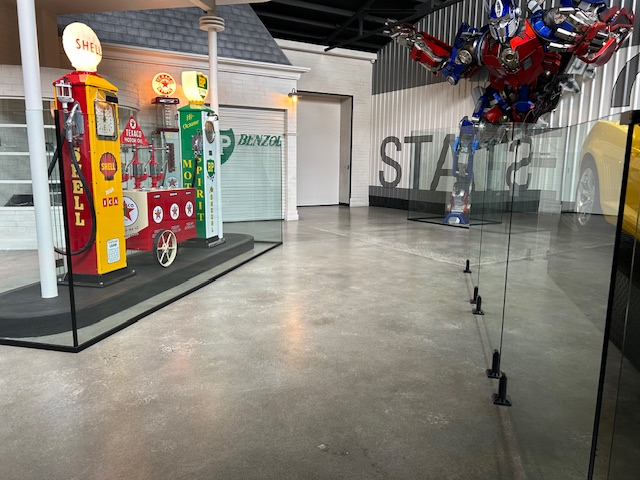
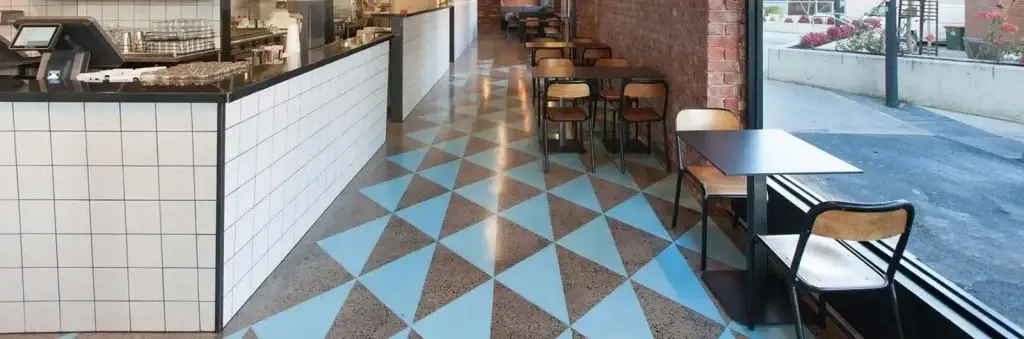
Polished concrete reflects natural and artificial light brilliantly, helping to reduce energy bills and making boutique stores and showrooms feel vastly larger and brighter. Its clean, modern, and slightly industrial finish highlights products and suits a wide range of premium architectural fitouts.
Epoxy offers incredible brandable colour options and visual effects. Metallic epoxies and decorative vinyl flake flooring systems create bold, statement floors that draw attention. Epoxy is often used in retail settings where a specific brand colour palette must be strictly matched.
2. Cafés, Restaurants, and Commercial Kitchens

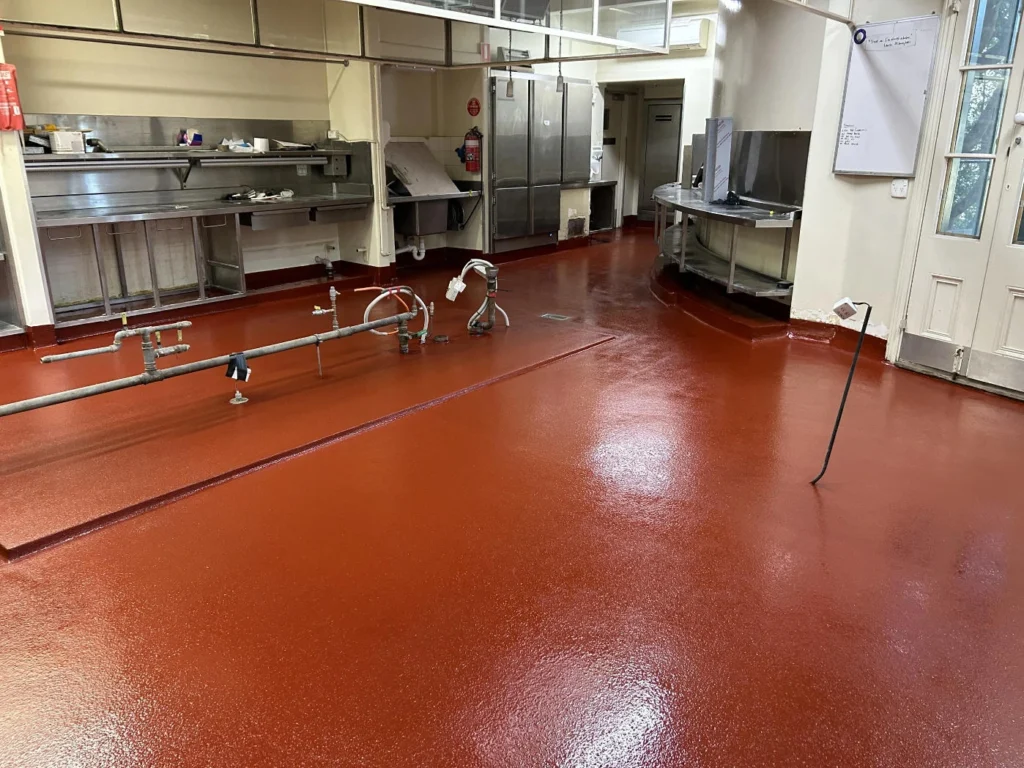
In the hospitality sector, hygiene and OHS safety come first. Epoxy forms a seamless, non-porous surface that stops food acids, hot oils, and wine from soaking into the substrate, making end-of-shift washdowns fast and consistent. Crucially, epoxy can be installed with integrated coving (where the floor curves seamlessly up the wall) to meet strict HACCP food safety standards.
Polished concrete delivers a highly sought-after urban look for front-of-house dining zones. By applying the right commercial-grade penetrating sealer and anti-slip finish, walkways and service areas remain safe for waitstaff while looking impeccable.
3. Gyms, Fitness Centres, and Childcare Facilities
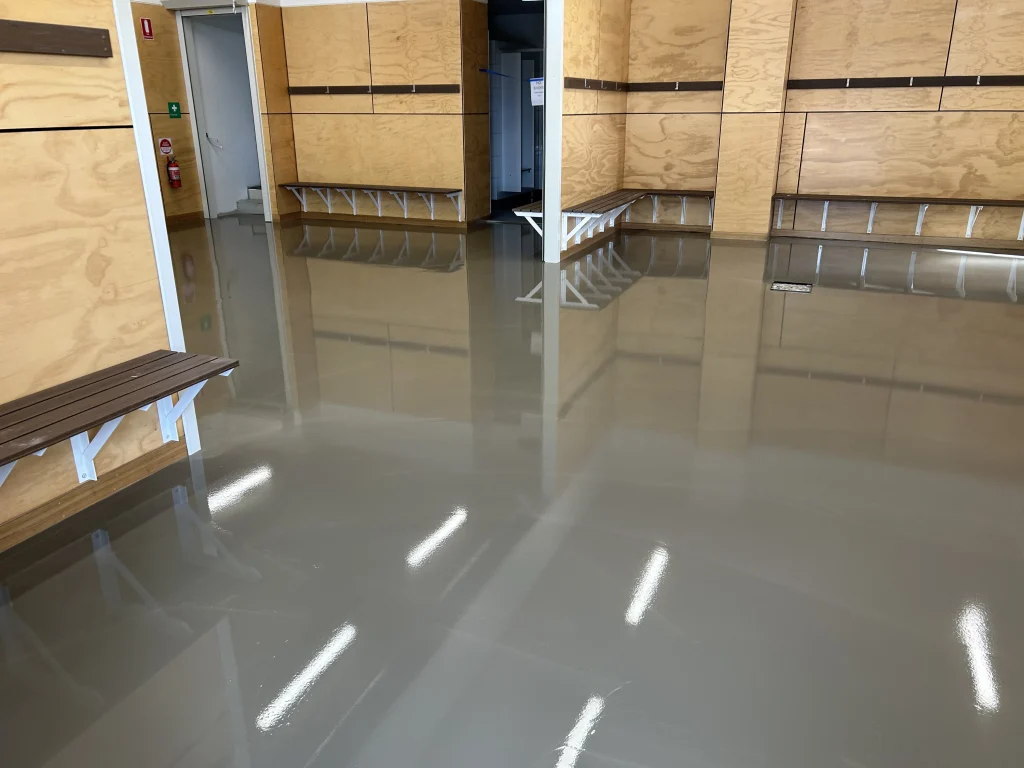
Gyms require extreme impact resistance and easy sanitation. Broadcast epoxy flake systems with added texture handle heavy use in weight zones, locker rooms, and wet areas (showers/toilets). The textured finish provides vital slip resistance when members are sweating.
Polished concrete stands up effortlessly to constant foot traffic and cleans quickly, which makes it ideal for reception areas, yoga studios, and circulation corridors in childcare and education environments where durability is key.
4. Corporate Offices and Creative Studios
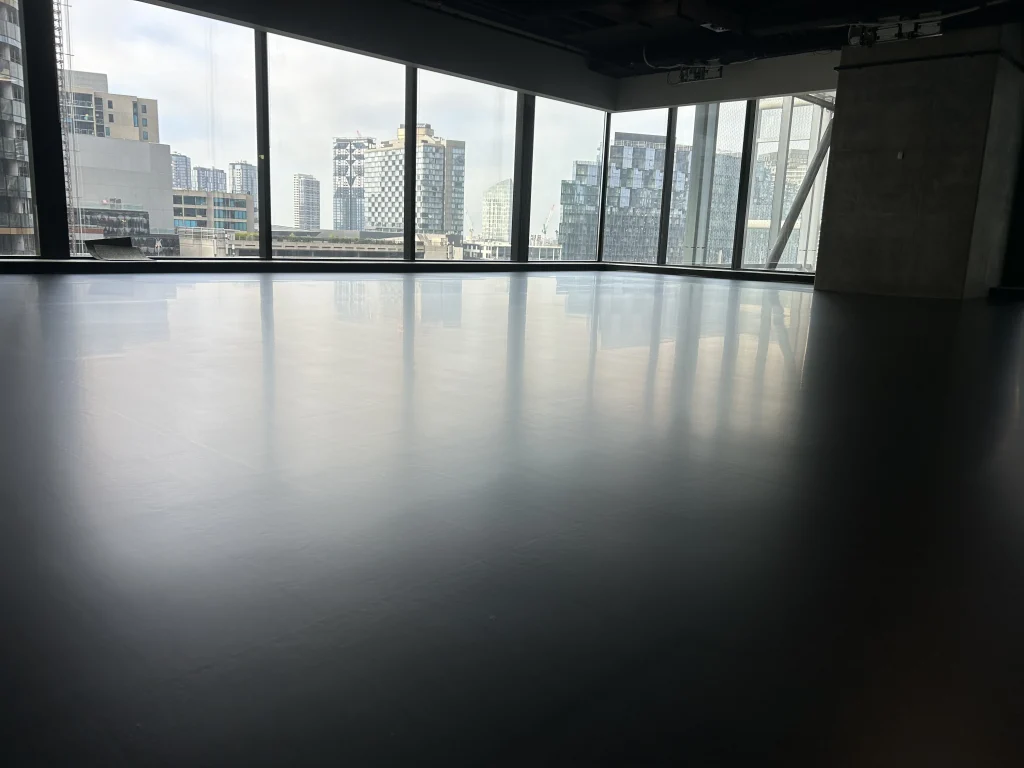
Polished concrete gives a bright, minimalist, and highly professional aesthetic that clients notice immediately. Because it does not harbor dust mites or allergens like commercial carpets do, it drastically improves indoor air quality for office staff. Epoxy also works exceptionally well in utility rooms, breakrooms, and back-of-house spaces, with options to define distinct operational zones through different coloured resins.
Durability, Daily Wear, and Lifecycle Analysis
Traffic and Heavy Loads
Both systems are engineered for high-performance commercial settings. Polished concrete resists wear from daily foot traffic for decades. Because the concrete is chemically densified, it will not dust or flake. Commercial epoxy systems have incredibly high compressive strength ratings, making them a superior choice for industrial warehousing, loading docks, and areas where heavy forklifts, pallet jacks, and rolling equipment are used daily.
Scratches, Chips, and Spills
Polished concrete is naturally hard and scratch-resistant, though dropping heavy, sharp objects can still chip the aggregate. Epoxy’s protective polyurethane topcoats absorb impacts slightly better and resist aggressive stains (like engine oil, bleach, and harsh cleaning chemicals), making it the go-to for automotive workshops and medical facilities.
Sunlight and UV Exposure
Standard basic epoxies can “amber” or turn yellow over time when exposed to direct sunlight. At Allgrind, we combat this by applying UV-stable aliphatic polyurethane topcoats in sunlit areas. Polished concrete is highly UV resistant, though the topical sealers may require periodic reapplication depending on window exposure.
Safety, Hygiene, and Environmental Compliance
Slip Resistance Standards
Workplace falls are a major liability. Under Safe Work Australia guidelines, commercial floors must meet specific friction requirements. Both floors can be engineered to meet Australian slip ratings (P3, P4, or P5). Wet zones like kitchens and bathrooms commonly target P5. Epoxy is highly customizable; we can broadcast silica sand or glass grit into the topcoat to achieve exact grip profiles.
VOCs and Indoor Air Quality
Polished concrete is an exceptionally green building choice. It uses the existing slab and involves zero-VOC mechanical processing. If you are aiming for Green Star Certification, MPC is highly favorable. Modern commercial epoxy systems are also formulated to be 100% solids with very low to zero Volatile Organic Compounds (VOCs), ensuring safe application even in operational buildings like hospitals or schools.
Cost, Installation Downtime, and ROI
Installation Downtime
In business, time is money. Epoxy typically installs relatively quickly—often within 2 to 4 days depending on the thickness of the system—with foot traffic allowed 24 hours after the final coat. Polished concrete requires multiple grinding and polishing passes with heavy machinery. This labor-intensive process usually takes 3 to 6 days. However, Allgrind regularly performs staged or after-hours/weekend work to ensure your retail store or office can keep trading without interruption.
Upfront and Lifecycle Costs
(Note: Prices are indicative and depend heavily on the condition of your existing concrete slab and preparation required.)
- Polished Concrete: Generally starts from around $75 to $120+ per m². The cost increases if you want “full aggregate exposure” (grinding deep into the stone) and a high-gloss finish. Its ROI is massive because its lifespan exceeds 20 years with minimal maintenance costs.
- Epoxy Flooring: Varies widely by system. A standard roll-coat can start around $45 per m², while heavy-duty vinyl flake or trowelled polyurethane systems range from $80 to $150+ per m². Epoxy delivers immense value where chemical resistance, seamless hygiene, or specific safety demarcations are legally required.
Quick Comparison Matrix
Use this quick reference table to compare the core features of both commercial flooring systems.
| Performance Factor | Commercial Epoxy Flooring | Mechanically Polished Concrete |
|---|---|---|
| Typical Install Time | 2–4 days (plus curing time) | 3–6 days (labor intensive) |
| Expected Lifespan | 10–15+ years (can be easily recoated) | 20+ years (with routine maintenance) |
| Aesthetics & Customisation | Unlimited solid colours, flakes, line marking, logos | Natural stone look, matte to high-gloss glass finish |
| Slip Resistance (OHS) | Highly tunable (P3 to P5 ratings easily achieved) | Tunable with penetrative sealers and grit additives |
| Chemical & Oil Resistance | Outstanding (Resists acids, fats, and solvents) | Moderate (Requires prompt cleanup to prevent etching) |
| Best Commercial Uses | Commercial kitchens, hospitals, warehouses, gyms | Retail boutiques, corporate offices, cafes, galleries |
| Maintenance Protocol | Daily sweep/mop with neutral cleaner | Daily sweep/mop, periodic burnishing to restore shine |
Commercial Flooring Maintenance Guide
Neither floor is entirely “maintenance-free”, but both are significantly cheaper and easier to maintain than commercial carpet or vinyl.
- For Epoxy: A daily sweep to remove abrasive dirt, followed by a mop using a neutral-pH cleaner, is all that is required. Avoid highly acidic cleaners or bleach, which can dull the resin topcoat over time. If the floor begins to look tired after a decade of forklift traffic, a light sand and a fresh topcoat will make it look brand new for a fraction of the initial installation cost.
- For Polished Concrete: Use a microfiber dust mop daily. When wet mopping, use only clean water or a pH-neutral cleaner designed specifically for polished concrete. Over years of heavy foot traffic, the microscopic shine may dull in walkways; a professional can easily run a high-speed burnishing machine over the floor to instantly restore the glass-like gloss without any heavy construction work.
Frequently Asked Questions (FAQs)
Which is more expensive: epoxy flooring or polished concrete?
In Melbourne, polished concrete generally starts around $75–$120 per sqm depending on the level of aggregate exposure and gloss. Commercial epoxy flooring typically ranges from $45 to $150+ per sqm, depending on whether it is a basic roll-coat, a vinyl flake system, or a heavy-duty trowelled polyurethane system. Over a 20-year lifecycle, both offer an excellent ROI compared to commercial carpet or vinyl.
Are epoxy and polished concrete floors slippery?
Both flooring systems can be customized to meet specific Australian slip resistance standards (such as P4 or P5 ratings). Epoxy achieves this through anti-slip aggregates (like aluminum oxide or quartz) mixed into the topcoat, making it ideal for wet commercial kitchens. Polished concrete relies on penetrating sealers and surface profiles to maintain grip in dry and mildly wet areas.
Can polished concrete be installed in a commercial kitchen?
While polished concrete is highly durable, it is not usually recommended for back-of-house commercial kitchens. Food acids, hot cooking oils, and frequent chemical washdowns can etch the concrete surface. A seamless, coved epoxy or polyurethane resin floor is the strict industry standard for achieving HACCP compliance in food preparation areas.
How long does commercial flooring installation take?
Epoxy installation usually takes 2 to 4 days, followed by a 24 to 48-hour curing period for foot traffic. Mechanically polished concrete typically takes 3 to 6 days depending on the size of the space and the required grinding passes. Allgrind offers staged and after-hours installations to minimize business downtime.
Can you polish or apply epoxy over an old, damaged concrete slab?
Yes, but extensive floor preparation is required. Our team will mechanically diamond grind the slab to remove old glues or coatings, repair concrete spalling, fill cracks with specialized resins, and apply concrete levelling compounds if necessary before applying an epoxy coating or beginning the polishing process.
Are these flooring options environmentally friendly?
Yes. Polished concrete is highly sustainable as it utilizes the existing building slab without adding manufactured materials, earning high Green Star ratings. Modern epoxy systems are available in 100% solids, low-VOC, or zero-VOC formulations, ensuring excellent indoor air quality for your staff and customers.
What Should Your Business Choose?
The decision ultimately comes down to the daily operational demands of your business. If you need a heavy-duty, branded, and completely seamless surface with strict chemical resistance and customizable slip control, commercial epoxy is an unbeatable fit. If you want a premium, light-enhancing, architectural finish with a multi-decade lifespan and incredibly simple upkeep, mechanically polished concrete is the ultimate choice. In many modern commercial fitouts, architects actually specify both: polished concrete for the elegant front-of-house, and epoxy for the hard-working back-of-house.
Need Expert Advice for Your Commercial Space?
Book a free site visit and a transparent, fixed quote. We will assess your existing concrete slab, operational timelines, and OHS requirements, then recommend the exact flooring system engineered for your business.